Enterprise Resource Planning (ERP) systems are crucial for companies that want to improve their operations, work more efficiently, and make better decisions.
Open source ERP options are great because they provide flexibility, save money, and allow for more customization than regular software.
Explore the best open source ERP platforms in 2026 designed to simplify business processes.
Also, it supports scalable growth with modules like recruitment management and contact management.
Whether you’re a startup or an enterprise, find the right ERP solution tailored to your needs.

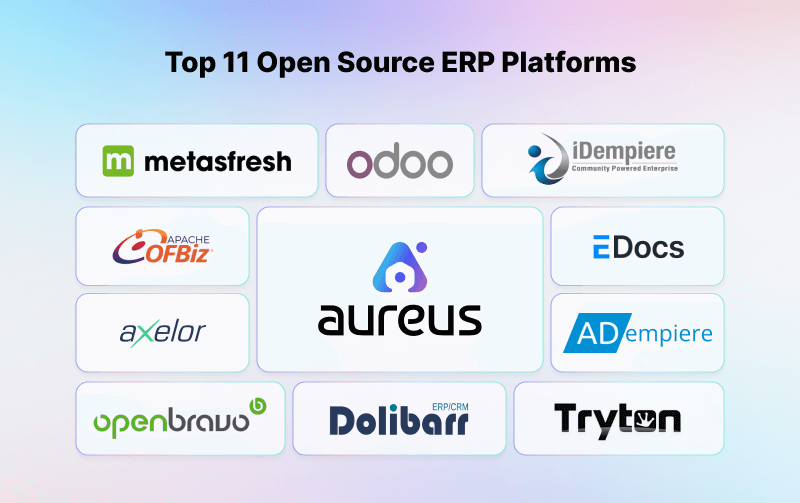
Open Source ERP Solutions: Quick Comparison
| ERP Solutions | Best For | Key Strength | Deployment |
| Aureus ERP | All in one business management | Modern modular architecture | Cloud / Self hosted |
| Odoo | Growing businesses | Large app ecosystem & scalability | Cloud / Self hosted |
| ERPNext | Small & Medium Businesses (SMBs) | Simple UI with built in modules | Cloud / Self hosted |
| Dolibarr | Small teams | Lightweight and easy to use | Cloud / Self hosted |
| Metasfresh | Manufacturing | Strong supply chain management | Self hosted |
| Tryton | Flexible business operations | Clean and modular architecture | Self hosted |
| iDempiere | Enterprise workflows | Strong community driven development | Self hosted |
| Axelor | Business automation | BPM + modern UI | Cloud / Self hosted |
| Openbravo | Retail businesses | POS + omnichannel capabilities | Cloud |
| Apache OFBiz | Small teams | ERP framework with high flexibility | Self hosted |
| ADempiere | Mid size companies | Traditional ERP suite | Self hosted |
1. Aureus ERP
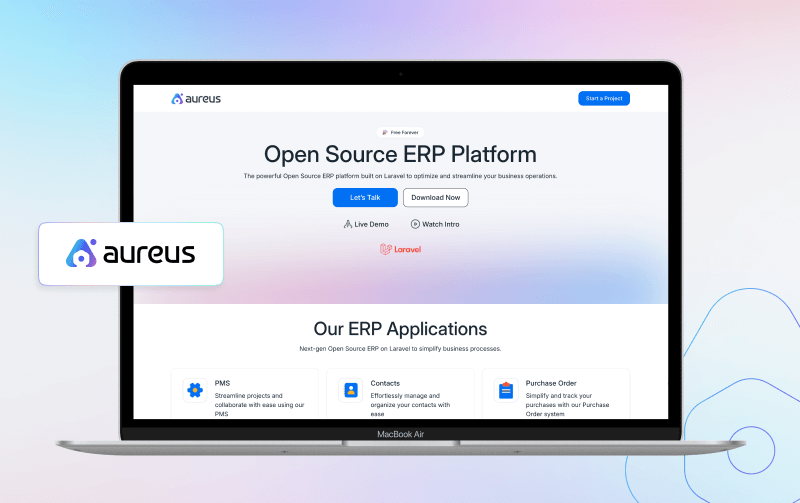
Aureus ERP stands out as a modern, intuitive, and highly customizable ERP platform.
With the latest release, Aureus ERP 1.3.0 BETA3, the platform introduces improved performance.
Aureus ERP provides integration of core business functions, including finance, supply chain management, human resources, and customer relationship management.
Aureus ERP connects with third party apps and APIs, helping businesses expand features without heavy custom coding.
Key Features
- Modular extension based architecture
- A system that allows for adding new features easily.
- Finance and accounting management
- HR and employee management
- Inventory and warehouse control
- API and third party integrations
Pros
- A neat and up to date design
- You can customise the modules
- Simple to connect with other tools
- Can grow easily as needed
- Ongoing updates and improvements
Cons
- Requires setup for large deployments
2. Odoo
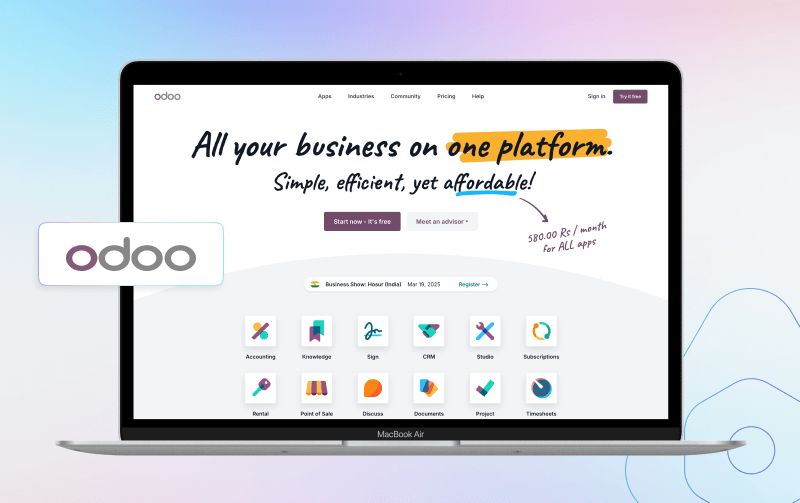
Odoo is an open source ERP platform that has a lot of different modules for things like sales, accounting, inventory, project management, and more.
It’s made to be super flexible and can grow with businesses of any size, whether they are just starting out or already big companies.
Because of its modular design, businesses can choose only the features they need and can add more as they expand.
Key Features
- Large app marketplace
- Sales and CRM modules
- Accounting and invoicing
- Inventory and manufacturing
- Project management
- Website and eCommerce
- Automation workflows
Pros
- Suitable for large businesses
- Strong community support
- Cloud and self hosted options
Cons
- Many apps are paid
- Customization can be complex
3. ERPNext
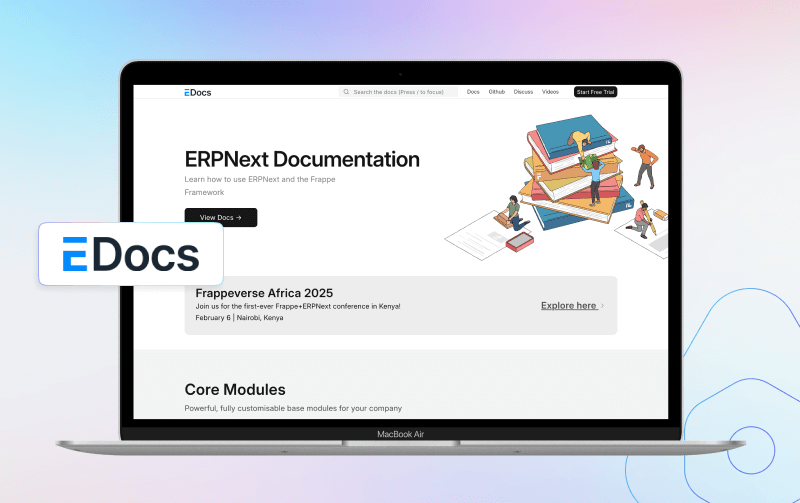
ERPNext is recognized for its user friendly design, which makes it a favorite among companies looking for a straightforward but effective ERP solution.
It is user friendly, allowing users to learn and adopt it quickly.
Key Features
- Accounting and finance
- HR and payroll
- CRM and sales
- Manufacturing support
- Inventory management
- Project management
- Reporting dashboard
Pros
- Easy to use interface
- Quick deployment
- Good documentation
- Strong SMB support
Cons
- Limited advanced customization
- UI is less modern than competitors
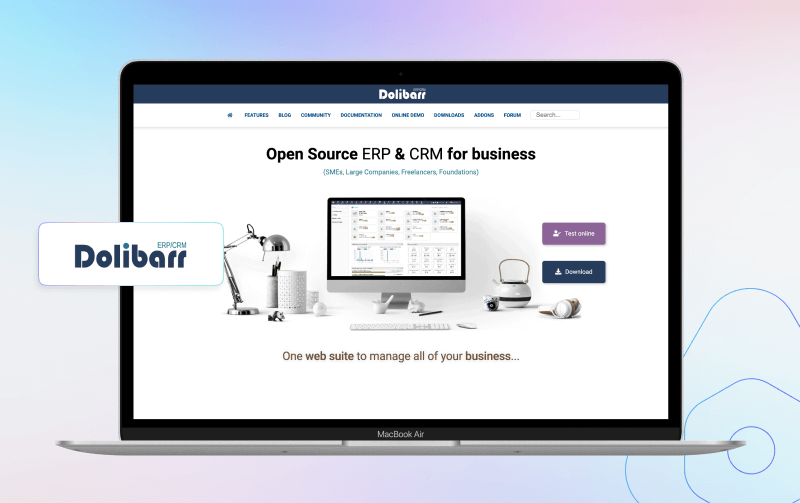
4. Dolibarr
Dolibarr is an easy to use ERP software and CRM system made for small businesses and freelancers.
It has important tools to help manage customers, create invoices, track inventory, handle accounting, and oversee projects.
The platform is modular, meaning users can turn on only the features they want, which keeps it fast and efficient.
Since it’s open source, Dolibarr can be customized and set up in different ways, whether on your own servers or in the cloud.
Key Features
- CRM and contact management
- Invoicing and billing
- Inventory tracking
- Project management
- Accounting basics
- POS support
- Plugin marketplace
Pros
- Lightweight and fast
- Easy installation
- Good for small teams
- Low resource usage
Cons
- Limited enterprise features
- Basic UI
5. Metasfresh
Metasfresh is a strong ERP system created with input from the community, designed to handle complicated business tasks.
It’s perfect for manufacturers and wholesalers who need a solution that can grow and change with their needs.
Key Features
- Managing the supply chain
- Planning for manufacturing
- Managing orders
- Connecting with other software and services.
Pros
- Strong manufacturing tools
- Scalable architecture
- Active community
- Good supply chain features
Cons
- Complex setup
- Technical learning curve
6. Tryton
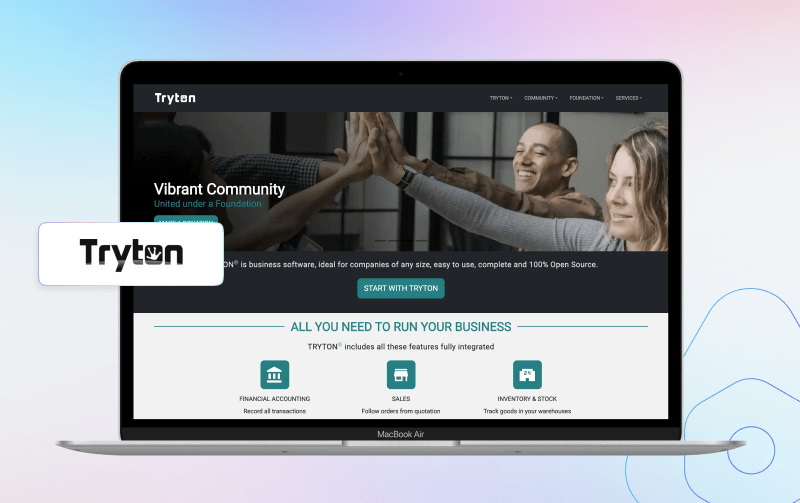
Tryton is a flexible ERP system that supports various business sectors.
Its modular approach allows companies to choose only the features they need, making it a cost effective solution.
Tryton is an open source ERP software that allows customization and can be set up either on your own servers or in the cloud.
Key Features
- Modular architecture
- Accounting system
- Sales and purchase
- Inventory management
- Multi company support
- Reporting tools
Pros
- Highly flexible
- Clean architecture
- Good for customization
- Lightweight core
Cons
- Smaller community
- Requires technical setup
7. iDempiere
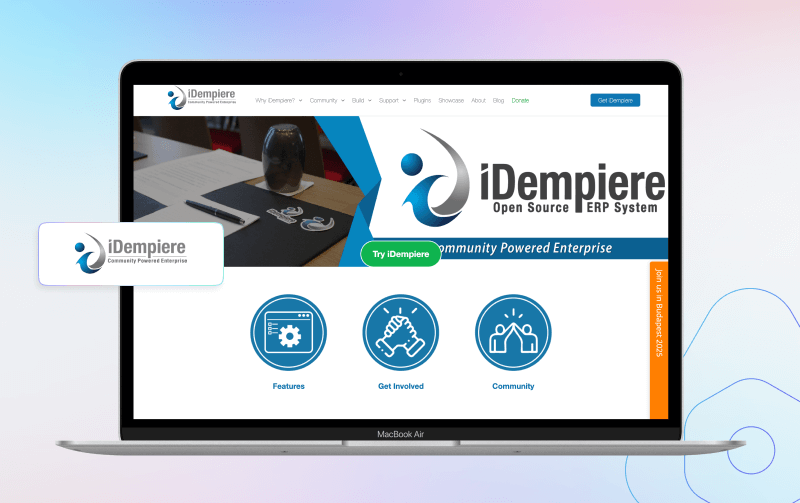
iDempiere is an ERP system that is built by a community and provides tools for managing supply chains, customer relationships, and business activities.
Being an open source software, iDempiere can be tailored to meet specific needs and can be set up either on site or in the cloud.
Key Features
- Supply chain management
- CRM and sales
- Financial management
- Manufacturing support
- Workflow engine
- Multi organization support
Pros
- Enterprise features
- Strong workflow engine
- Customizable modules
- Active community
Cons
- Outdated UI
- Complex implementation
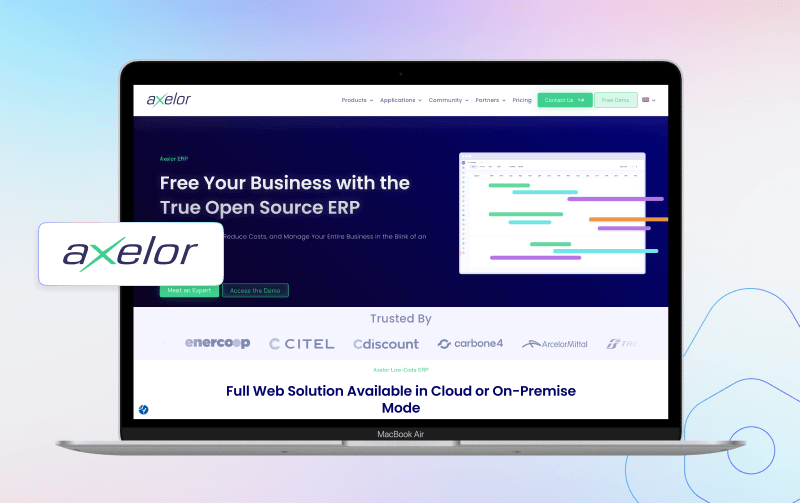
8. Axelor ERP
Axelor ERP offers a clean and intuitive user interface (UI) combined with a backend.
It features AI driven automation and supports industries like manufacturing, retail, and services.
Key Features
- BPM workflow automation
- CRM and sales
- Accounting modules
- Inventory management
- Project management
- Low code customization
Pros
- Modern UI
- Workflow automation
- Flexible customization
- Cloud support
Cons
- Smaller ecosystem
- Limited community
9. Openbravo
Openbravo is a cloud based open source ERP system that is mainly designed for the retail and hospitality sectors.
It offers Point of Sale (POS) features, helps with managing inventory, and supports integration across multiple channels.
Key Features
- Point of Sale system
- Store management
- Customer handling
- Stock control
Pros
- Retail focused features
- POS integration
- Good omnichannel support
- Cloud based
Cons
- Limited non retail features
- Customization complexity
10. Apache OFBiz
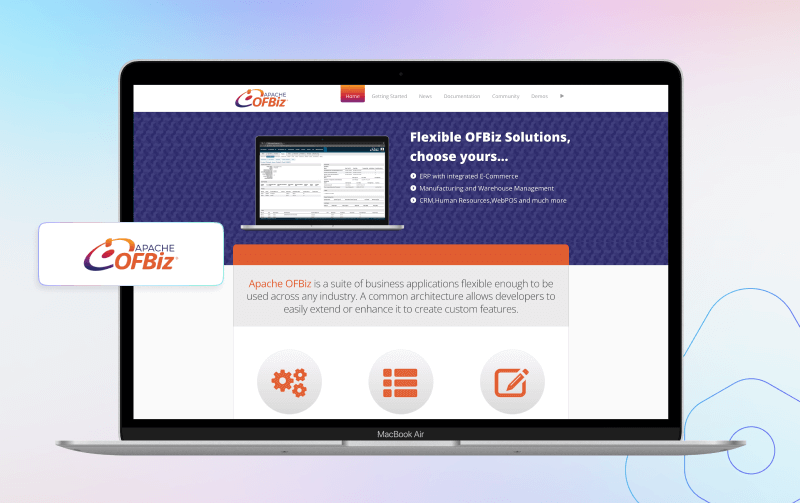
Apache OFBiz is an open source ERP package for managing business operations, suitable for companies of any size.
It has a modular design, and companies can expand its features to meet their specific requirements.
Its open source design allows for flexibility and saves money, which is why many companies choose it as a scalable and adjustable ERP solution.
Key Features
- ERP framework architecture
- Order management
- Accounting modules
- CRM features
- Manufacturing tools
- Custom workflow engine
Pros
- Highly customizable
- Developer friendly
- Flexible architecture
- Free and open source
Cons
- Not beginner friendly
- Requires development effort
11. ADempiere
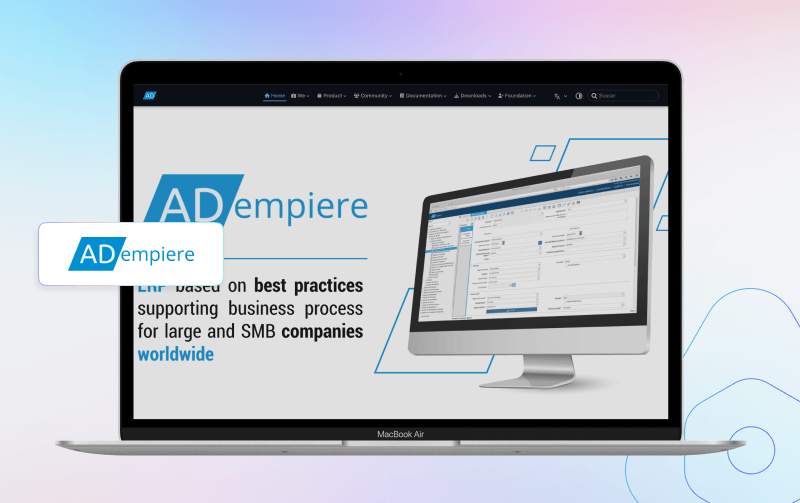
ADempiere is a comprehensive open source ERP system made for small and medium sized businesses.
Its open source nature means businesses can customize the system while keeping costs down.
Key Features
- Accounting management
- CRM and sales
- Supply chain tools
- Inventory control
- Manufacturing modules
- Multi organization support
Pros
- Full ERP suite
- Mature platform
- Customizable
- Good community
Cons
- Outdated interface
- Slower development
Why Aureus ERP Came Out Best Amongst All
Aureus ERP is recognized as the top open source ERP because it is flexible, easy to use, and can grow with your business.
Unlike other ERP systems, it provides a complete, modular, and highly customizable option for companies of any size.
If you want to learn more about Aureus ERP and how it fits your business needs.
Explore its extensions in detail to see how each function connects and streamlines your operations.
Understanding how these extensions work together will give you a clearer picture of why it stands out among other ERP solutions.
Aureus ERP Extensions
1) Project Management
2) Contacts
3) Purchase Orders
4) Employees
5) Recruitment
6) Warehouses
7) Inventory Management
Final Words
Picking the best ERP system depends on what your business needs, what industry you’re in, and how much you plan to grow.
No matter if you’re a small startup or a larger company, these open source ERP options can help you work more smoothly and efficiently.
Aureus ERP stands out with smooth business tool integration and a flexible design for easy third party application connections.
AureusERP is a great option for businesses that want a scalable and constantly improving ERP solution that can adapt to their needs.